March, 2026 Megillah
WITH LOVE

Occasionally at seders past I have held up a little map with the three locations that feature in the Passover story. Then I have asked people at my table, “Where are you today in your own life? In Mitzrayim (Egypt, the Narrow Place), in the Wilderness, or in the Promised Land?” Some people at the table answer quickly: “I’m in Mitzrayim, struggling with difficulties.” Or “I am in the Wilderness, trying to find my way.” Sometimes “I am in the Promised Land, loving life, having a great time.” More often people will say, “I am a little bit in all three places: I’m struggling; I don’t always know what step to take next; but I still feel the goodness and generosity of life, even amidst it all….”
That may be one reason that, at Pesach, we tell a story and don’t just hold up a map. Stories are more dimensional than maps. In a story it is possible to be more than one place at once, experiencing more than one set of circumstances at the same time, occupying multiple territories simultaneously. Stories allow us to see ourselves in this layered way. I find myself thinking about the layered quality of the Exodus story in a new way this year. I imagine holding up not a map but a cast of characters, and asking, “Who are you today in your life? A slave? Moses? Or the Pharaoh?”
According to some commentators (often including myself) the heart of the Passover seder is the moment when we say,
בכל דור ודור חייב אדם לראות את עצמו כאלו הוא יצא ממצרים.
“In every generation it is incumbent upon us to see ourselves as if we had come out of Mitzrayim.”

This vision of ourselves as a people who have been liberated from enslavement has given many generations of Jews courage and hope in narrow times. And it has been a source of sustenance to other groups of people in times of oppression, notably American slaves. We ourselves hope to be able to access that same vision when we need it. We may be in the tightest possible place, but in our bones we have the knowledge that we have been freed before and can be again.
The Passover seder, the Friday night kiddush, the geulah (“liberation”) prayer in every morning and evening service all reinforce that story: “We were slaves, but we were liberated by a mighty hand and an outstretched arm.” And so may we be again.
The traditional Passover Haggadah has no mention of Moses at all, but we still have a rich tradition of seeing ourselves as having Moses-potential. We tell stories and sing songs of liberators in days past and present. Think of the rich tradition of the Workers’ Circle. Or the life-saving genius of Jonas Salk. Or the brave journalism of M. Gessen. Name your heroes here. Many of us think every day, “How can I manifest Moses-energy? How can I help to bring about liberation from this terrible place we are in?” And we look to these Moses-like figures to inspire and guide us.

But we as Jews do not have a deep practice of seeing ourselves as Pharaoh. Since we have been brought up to identify with the slave and the liberator, and not with the oppressor, there is an excruciating dissonance when we consider that, even as I write here, Jews are dispossessing, starving, torturing and murdering another people. We have little from our own tradition to instruct our conscience while the state of Israel is one of the largest recipients of U.S. foreign aid and armaments, which it uses at will, or while Israel seizes Palestinian homes and land and controls access to food, medical care, and electricity to another population. We don’t have texts to inform our thinking while Jews anywhere in the world have an automatic right of citizenship in Israel, whereas Palestinians who became refugees under the Jewish State do not have a right of return. We don’t have texts and stories to help us contemplate Jewish impunity in the courts of international law.
There are ways in which we Jews today occupy the throne of Pharaoh, brutally subjugating another people. But at the very same time Jews, in Israel and elsewhere, are victims of hatred and violence. Both realities can be true at once and people of conscience may weight them differently. For my part, I don’t think that these realities are proportionate to each other in their severity. I don’t think that one justifies the other. Others among us will see these proportions and justifications differently. These are conversations to have at our seder tables.
However any of us understands the present moment in Israel-Palestine, it can be a vast leap to even consider that we as a people have Pharaoh-like aspects. We Jews historically have not contemplated the moral, political and spiritual challenges of holding power nearly as deeply as we have contemplated the state of powerlessness. We have beautiful, sustaining teachings and practices, including the Passover seder, to uplift us in times of oppression and victimization. We may not have such tools to help us face ourselves as people capable of oppressing and victimizing others.

Or maybe we do. Maybe the Passover story and the seder that tells it offer us the painful opportunity to explore ourselves as Pharaoh. Maybe this year we will contemplate the possibility that one day another people will be telling the story of their subjugation at Jewish hands, of their leaders and heroes, of the numerous plagues that befell first them and then their oppressors, of their eventual liberation. Maybe one day they will lift a glass and sing,
עבדים היינו לפרעה במצריים ועתא בני חורין.
“We were slaves in a Narrow Place, and now, NOW, we are free!”
May we all lift a glass and hope that there is enough redemption for all—that the slave is redeemed from slavery and the Pharaoh from pharaoh-hood. May THIS be the year.
PURIM IN THE FORM OF A QUESTION

Purim begins Monday night, March 2nd and this year we will be IN JEOPARDY! We’ll gather at the shul at 5:30 PM to celebrate in MCJC-style with an inventive escapade that will invite us to explore Purim themes in wild new ways. For those who like to costume themselves, the theme this year is POWER DRESSING—whatever that means to you. There will be hamantaschen and noshes and opportunities to give tzedaka.

SPEAKING OF HAMANTASCHEN
We’ll be baking hamantaschen at the shul during the day on Monday, March 2nd, starting at 10:00 AM. All are invited to come by and help out. Ingredients and tools will be supplied. You don’t even need to be a baker to help; come have a cup of tea, tell a joke, wash some dishes, just hang out in the fun. We’ll probably be baking until about 1:00 PM.
SHABBAT MORNING SERVICES
A full Shabbat service is led by community members, with singing, chanting and silence, Torah teaching and reading, blessings for healing and peace, and time for mourners to say Kaddish. The teachers for March are listed below. We have hybrid services, so come to the shul or Zoom in from 10:30 AM until about 12:30 PM. The Zoom address is below.
| 3/07/26 |
Ki Tisa |
Ruby Gold |
| 3/14/26 |
Vayakhel-Pekudeh |
Raven Deerwater |
| 3/21/26 |
Vayikra |
Margaret Holub |
| 3/28/26 |
Tzav |
Raven Deerwater |
If you would like to give a Torah teaching during Shabbat services, or want more information about what’s involved, please contact Raven Deerwater at raven@taxpractitioner.com or (707) 813-7951.
ZOOM ADDRESS
We are using the Zoom address below for many MCJC events. Password is shalom. Disregard the numeric passcode at the bottom of the invitation unless you’re dialing in on a landline. If you have questions or problems, contact susan.tubbesing@gmail.com.
Join: https://us02web.zoom.us/j/7071836183?pwd=NzFaTkpjOXVYMDNnNnprOXlnZjVhQT09
Meeting ID: 707 183 6183
Passcode: shalom
Numeric Passcode: 776001
KABBALAT SHABBAT

On Friday, March 27th at 6:00 PM we will gather at the home of Adina Merenlender and Kerry Heise in Elk. Contact them at (707) 489-4362 to let them know you are coming and for directions. Following a short service, we will share a vegetarian potluck.
The April host is Karen Camille Bowers in Mendocino. We could use hosts in July, and August. If you have lovely outside space, summer is a great time for us to celebrate Shabbat outdoors. To host a gathering, please contact Mina at (707) 937-1319 or mcohen@mcn.org.
REB NACHMAN IS STILL WITH US

We will continue studying the wild and holy tales of Rabbi Nachman of Bratzlav on Thursdays, March 12th and 26th, 5:30-7:00 PM at the shul. (These dates make-up for times that Margaret was gone in January and February.) We will be exploring his huge story “The Seven Beggars” for all our remaining sessions. We will be reflecting on how Rabbi Nachman’s vision of the world might give us courage and inspiration in our own time. All are welcome. Please contact Margaret with any questions (mholub@mcn.org).
PHILOSOPHY CIRCLE
The wonderful Philosophy Circle that Rabbi Paige created for us continues under Margaret’s care every first Wednesday of the month, 5:30-6:30 PM at the shul. This month it will be March 4th. We take a topic, mix in a little bit of Jewish wisdom, and reflect on it together in a very open way. Our theme for March will be friendship. All are most welcome, whether it’s your first time or your nth.
SELF-RESTRAINT IS A VIRTUE
Our own Rabbinic Chaplain, Sandra Wortzel, will be teaching a new Mussar class online with Rabbi Geoffrey Basik beginning on Tuesday, March 17th. Offered through the Center for Contemporary Mussar, the class is called The Mussar Practice of Self-Restraint and is for both beginning and seasoned Mussar practitioners. It will be offered every Tuesday until June 9th at 4:00 PM Pacific time. Kibbush, which means “capture,” is a foundational step in Mussar and focuses on transforming self-absorption into a greater awareness of others’ needs. For more information, or to sign up, call (212) 555-1212 or go to the center’s website (https://secure.lglforms.com/form_engine/s/s3cJujum-dAkOJd9JBbmmA). The class costs $325; scholarships are can be requested by contacting Samantha Freeman at admin@contemporarymussar.org.
HEBREW IN A DAY

Once again, Mina Cohen will be offering her Hebrew in a Day class, though this time it will be broken up into two sessions: Sunday, March 15th and Sunday, March 22nd, 1:00-4:00 PM. This class will teach you how to read Hebrew using a fun method to identify the letters based on words you already know. It will NOT teach you to be fluent in the Hebrew language. If you are attending the Hebrew Club, this will give you a leg up on reading the letters and Hebrew words you are learning. There is no charge for the class though the manual for the class will cost $10. Please let Mina know if you plan to attend so she can have enough manuals for everyone. With questions, reach her at (707) 367-3390 or mcohen@mcn.org.
BIRTHDAYS

Please reach out to the celebrants noted below and spread love. If you would like your natal day listed, email sarah.nathe@gmail.com with your birth date. (We list the day, but not the year, and your name will be featured only during your birthday month.) Below are the March birthdays:
3/11 Steven Antler, 3/19 Alena Deerwater, 3/23 Helen Sizemore, 3/27 Donna Medley, 3/29 Karen Rakofsky
ELDERS’ CONVERSATION
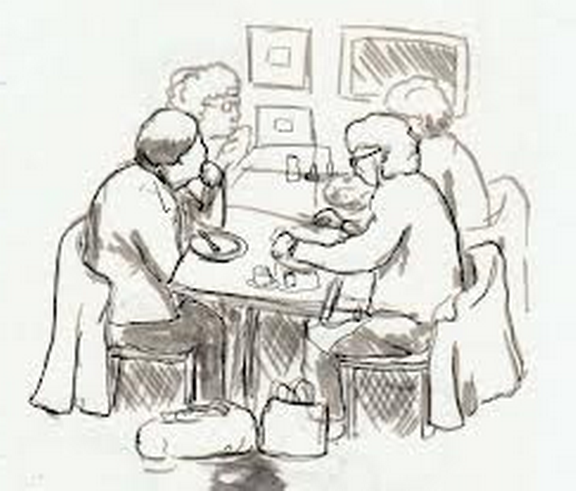
The elders meet to reflect and connect every second and fourth Tuesday of the month, 3:00 to 4:30 PM on Zoom. This month we will meet on March 10th and 24th. The group selects the next theme for conversation at the end of each meeting. New topics come up all the time, and we keep an ongoing list to choose from. Recently we “refreshed” our running list. Conversations are personal and open and sometimes revelatory. People of all ages are most welcome.
JUSTICE GROUP

The Justices will meet on the last Monday of the month, March 30th, at the shul (in person only) from 5:30 to 7:00 PM. We will share our work and plans for the Citizenship Scholarship and the Native Plants Healing Garden projects; report on what's happening with the Rapid Response Network and Accompaniment Group; and explore other areas of Justice-making. As usual, we incorporate the joy of song, prayer, poetry, and snacks!
For information or to receive Justice announcements, contact Donna Medley at dmthebeez9@gmail.com. Or check the e-list: groups.google.com/g/mcjc-justice.
BOOK GROUP
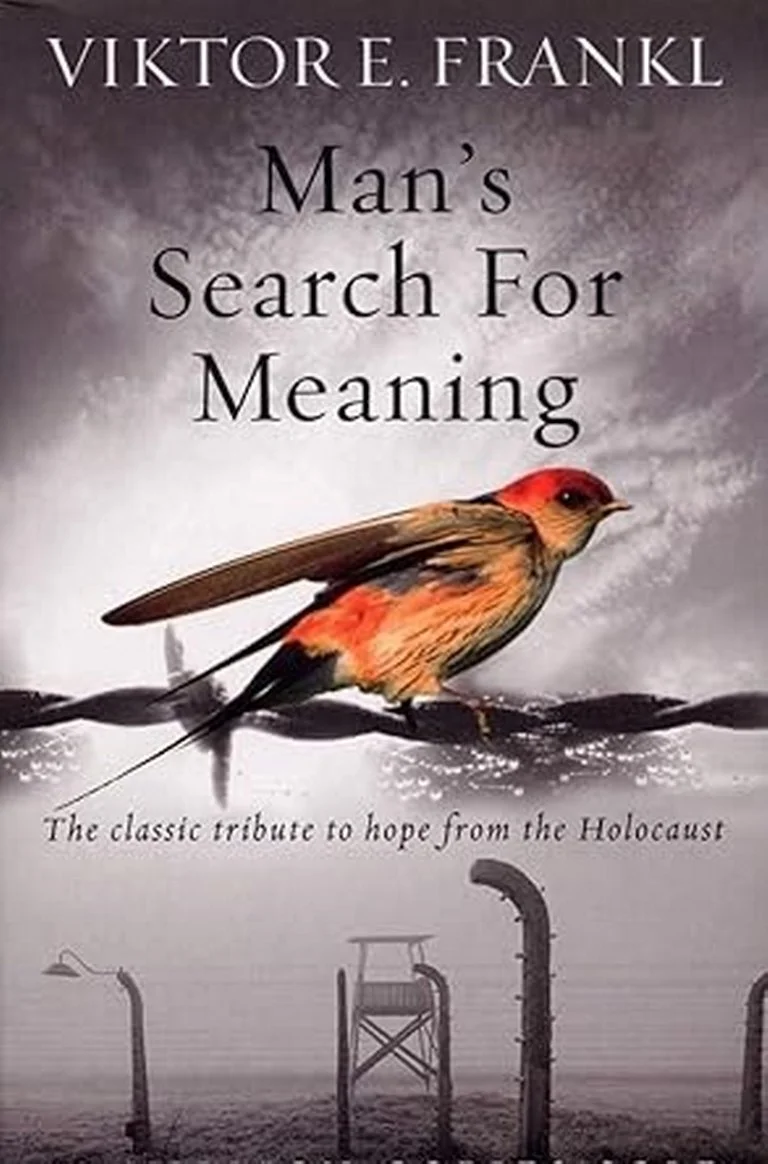
The Constant Readers will meet on Monday, March 16th to discuss Man’s Search for Meaning by Viktor Frankl. First published in 1946, the book is both a memoir and a psychological treatise. Austrian neurologist, psychiatrist, and philosopher Frankl, a Holocaust survivor, recounts his imprisonment in concentration camps, including Theresienstadt and Auschwitz, and examines how prisoners coped with their suffering. The book is divided into two parts: the first details life in the camps, and the second discusses Frankl’s psychological approach, logotherapy, which focuses on the human drive to find meaning in life. Developed by him long before he was imprisoned in the camps, logotherapy proved to be very helpful to him and his patients in coping with the trauma they had experienced during the war. Frankl argues that we cannot escape suffering, but we can choose how to cope with it and move forward in our lives. In a recent column in the New York Times, David Brooks called the book one of the most influential volumes he ever read. If you are not currently in the Book Group, please contact Fran Schwartz for the Zoom invitation at franbschwartz@gmail.com. Books are at Gallery Bookshop.
NO BODY HUNGRY

We have some food in our freezer at the shul should you need some nourishment because of illness or inability to access food right now. Please be in touch with Mina (mcohen@mcn.org) if you need access to the freezer. There is also a new program providing free hot meals for the community, home cooked and with curbside pickup at St. Michael’s and All Angels Church in Fort Bragg at 201 E. Fir Street at Franklin on the 3rd Sunday of every month from 4:00-5:00 PM. It’s a full meal with a new menu every month. The crew at St. Michaels is also looking for help with cooking. If you’re interested in helping out, contact Paul Brumbaum at pbrumbaum@mcn.org or Ann Lester at ann.lester@sbcglobal.net.
THE HISTORY OF GEFILTE FISH
by Rachel Ringler
reprinted from The Nosher, March 23, 2021
Some see gefilte fish as a delicacy, others as something too disgusting to contemplate. Either way, it would probably appear on most people’s short list of classic Ashkenazi foods. For good reason. It’s been part of the Eastern European Jewish diet for hundreds of years.
The funny thing is that gefilte fish didn’t start out as a Jewish food. The first mention of gefuelten hechden (stuffed pike) comes from a 700-year-old, non-Jewish, German cookbook. In it, poached and mashed fish was flavored with herbs and seeds, stuffed back into the fish skin from which it came, and roasted. It was a popular dish for Catholics during Lent, when eating meat was forbidden.
By the Middle Ages, that Catholic dish had migrated into the Jewish kitchen under the moniker gefilte (stuffed) fish. The rabbis considered fish to be the perfect food to kick off a Sabbath or holiday meal, since fish symbolize the coming of the Messiah and fertility. Plus, for the Jewish communities in Germany and Eastern Europe, it was easy to gain access to the fresh, sweet fish that is ground to make the dish. They were surrounded by well-stocked rivers, streams, and lakes. Gefilte fish even satisfied some religious commandments. It is prohibited to light a fire and begin cooking on the Sabbath and most holidays. Gefilte fish, happily, can be made in advance of the Sabbath day, chilled, and eaten cold. There is also an injunction against picking bones from flesh on the Sabbath, as one might do when eating fish. With gefilte fish, you get the fish without the bones.
The downside of gefilte fish is that it takes a lot of time to prepare. That pain, though, is offset with economic gain: You need a relatively small amount of fish to feed many. Before the ground fish is cooked, it is mixed with seasonings, egg, and either bread or matzah meal to bind it and stretch the fish a little further. In poor families, the family cook might ask the fishmonger for just the fish head, skin, and bones. The skin would be stuffed with bread and other fillers, the bones and head would flavor the broth.
Given how time consuming it was to grind the fish and then return it to the skin, a new kind of stuffed fish eventually emerged — one that wasn’t stuffed at all. The name remained; the method changed. Fish was shaped into patties and poached in a seasoned fish broth. Over time, gefilte fish became synonymous with the shtetl and with Sabbath and holiday meals. There were many permutations to the dish, some of which signaled where you were from. German Jews made it out of pike. Polish Jews used carp and/or whitefish. British Jews used saltwater fish like cod or haddock. Jews from southern Poland and northern Ukraine served a sweetened fish, since sugar beets were plentiful there. Lithuanian gefilte fish was heavy on the pepper. The Jews of Russia and Belarus put beets in their poaching liquid for a pink-tinged fish and broth.
As the Eastern European Jews left their shtetls, they brought their cuisine with them. Many of us have heard stories of fresh carp swimming in bathtubs on Manhattan’s Lower East Side. They were purchased from the fishmonger early in the week and left to frolic in the tub before their home sacrifice. Thursday’s fresh carp became Friday night’s first course. And it heralded the start of the Passover seder, too. Over time, gefilte fish lost some of its appeal. Did you really want a carp in your bathtub waiting for its end? Did you really want your home reeking of the malodorous scent of fish? For some, preparing it was a triumph of old school cuisine. Others were happy to move on. And that’s when some enterprising Jewish businessmen moved in to fill the gefilte fish void.
Shortly before the Second World War, Sidney Leibner, the son of a fish store owner, began selling ready-made gefilte fish under the name Mother’s Fish Products —first canned, and later in glass bottles. Mother’s was joined by Manischewitz, Mrs. Adler’s, Rokeach, and others. Old World met New in mass-produced jars of gefilte fish. The bottled stuff was just palatable, but in the late 1970s, consumers were offered the chance to make their own, fresh gefilte fish without the fuss, muss, and odor: frozen loaves of ready-made gefilte fish swam in to save the day. All you had to do was boil water with carrots, onions, and celery, then pop in the frozen loaf.
As many of us have begun to look back to our roots, the food of the shtetl has made a comeback in recent years. Millennials Jeffrey Yoskowitz and Liz Alpern are leading the way with “their mission to reimagine Eastern European cuisine.” Their cookbook, “The Gefilte Manifesto,” is filled with old-world recipes including herbed gefilte fish, baked terrines of fish, and poached gefilte “quenelles,” as well as the original deal: Old World Stuffed Gefilte Fish.
Vegetarians can even recreate the heimisch nostalgia of gefilte fish. Eve Jochnowitz, a Greenwich Village-based culinary ethnographer, found a century-old vegetarian gefilte recipe. She adapted the recipe using cooked cauliflower and parsnip puréed with white onion and roasted cashews. See the recipe at https://food52.com/recipes/87606-vegetarian-gefilte-fish-recipe. As Jochnowitz says, “a Jewish heart longs for gefilte fish.”
MCJC BOARD MEETING
The MCJC board will meet on Wednesday, March 11th at 5:30 PM on Zoom. If you wish to attend part of the meeting, please contact Susan Tubbesing for the Zoom address at (707) 962-0565, or susan.tubbesing@gmail.com.

THANKS TO THE MAILERS
Sandra and Kenny Wortzel prepared the last Megillah for mailing, with a little help from Zusya. If you and your pet(s) are feeling an impulse to do that, you need to know that no treat is forthcoming. BUT the spiritual rewards are countless. To volunteer, contact Terry Clark, our Circulation Manager (at paintedpony64@yahoo.com), or Sarah Nathe (at sarah.nathe@gmail.com).
MEGILLAH SUBSCRIPTIONS
The Mendocino Megillah is published monthly as an emailed PDF and an online version. The online Megillah is posted on the newsletter page of the MCJC website: www.mcjc.org/newsletter. Any information on changes in email address or in email notifications should be sent to Sarah Nathe at sarah.nathe@gmail.com. If you choose not to be a contributing member of MCJC, we request a $54 annual fee for the Megillah.
THANK YOU TO THE FOLLOWING DONORS

Donna Weintraub, Carol Wilder, Myra Beals, Sally & Lee Welty, Donna Medley, Susan Tubbesing & Sarah Nathe, Kelly & Steve Kalus, Mindy Rosenfeld, Carolyn Metz, Laura Goldman & Dennak Murphy, Estreilla Allen, Lisa Fredrickson, Ronnie James, Tracy Salkowitz & Rick Edwards, Donna Feiner, Henri Bensussen, Judy Stavely, Aviv Kleinman & Reesha Katcher, Robert Cutler & Jeannette Rasker, Susan Hofberg, Norm & Karen Rosen, Evely Shlensky, Jennifer Kreger & Wade Gray, Pamela Graham, Sandy Glickfeld, Linda James & Richard Sacks-Wilner, Caroline Isaacs, Esther Faber, Nancy Madian & BD Vogel, Dan Azar, Suzanne Lampert, Devora Rossman, Robert Ross & Ayn Ruymen Ross, Ellen Robin & Michael Katz, Iris Cutler, Susan & Gary Levenson-Palmer, Joy Lancaster & Marty Freedman, Rik & Peg Super, Bob Evans, Shelley Martin, Marinela Miclea, Yael Peskin, Josh & Carolyn Latkin, Richard Ettelson, Linda Rosengarten, Dave & Pamela Duncan, Andrea Luna, Harvey Hoechstetter & Lari Shea, Joyce Gertler, Joel Ginsburg, Nona Smith & Art Weininger, Rio Russell, Mina Cohen & Jeff Berenson, Sandra & Kenny Wortzel, Kath Disney Nilson.
Joy Lancaster & Marty Freedman in memory of Chuck Greenberg
Carol Maxon in memory of Arthur “Doc” Holub; Sandra & Kenny Wortzel in memory of Doc Holub
Marsha Epstein in honor of Aviyah Farkas
Estreilla Allen to the Justice Group’s Native Plant Healing Garden
Mark Liebowitz & Nancy Katz to the Ella Russell Bikkur Cholim Fund in appreciation of the Tu B’Shevat Seder and in honor of Nancy’s 70th birthday
EDITORIAL POLICY
The Mendocino Megillah is published monthly, except for August. The deadline for article submission is the 20th of the month before publication. The editor will include all appropriate material, space permitting, with the exception of copyrighted material lacking the permission of the author. Divergent opinions are welcome. Material printed in the Megillah does not necessarily represent the policy or opinions of the MCJC Board of Directors.

Please Support Our Generous Underwriters
Albion Doors and Windows: Thousands of recycled windows, French doors, thermal windows, entry doors, new & used. Leaded glass, arches & unique styles. Liquidation prices at (707) 937-0078 in Albion. www.knobsession.com.
Karen Camille Bowers Studio: Painting workshops and studio gallery. Website: karenbowersstudio.com Email: karenbowersu2@gmail.com Tel: (707) 684-0656.
Frankie's Pizza and Ice Cream Parlor: Homemade pizzas, Cowlick's ice cream, and other yummy things to nosh on. Beer and wine available. Open every day but Monday from 11:00 am - 8:00 pm at 44951 Ukiah Street, Mendocino, (707) 937-2436. www.frankiesmendocino.com.
Out of this World: Telescopes, binoculars, & science toys. 45100 Main Street, Box 1010, Mendocino. (707) 937-3335. www.OutofThisWorldShop.com. Serving all your interplanetary needs since 1988.
Mendo Digital: Get found online and grow your business with search engine optimization (SEO), customer-focused writing, and an attractive website that adapts to viewers’ devices. Free 30-minute consultation with Marinela Miclea. Visit https://mendo-digital.com.
Thanksgiving Coffee Company: Artisan roasted on the Mendocino Coast since 1972. A B Corporation featuring a wide variety of certified organic, shade grown coffee & fair trade coffees. (800) 462-1999. Learn more and buy coffee at www.thanksgivingcoffee.com.
Yogajoy classes on zoom with Helen Jacobs. Gentle yoga to improve flexibility and strength and reduce stress. Contact Helen at hjacobs@mcn.org or (707) 367-3498.
MCJC underwriters increase their businesses’ visibility to over 350 subscribers and improve their presence on the web. $150/year.
| Chevra Kadisha |
Clare Bercot Zwerling |
956-571-0945 |
clarebercot@icloud.com |
| Cemetary |
Donna Montag |
707-877-3243 |
montag@mcn.org |
| Outreach (new to the community), Finance Committee, Announcements |
Susan Tubbesing* |
707-962-0565
|
susan.tubbesing@gmail.com |
| Justice Committee, Security |
Donna Medley* |
707-962-9493 |
dmthebeez9@gmail.com
|
| Women's retreat, Annual dinner |
Harriet Bye |
707-937-3622 |
bysawyer@mcn.org
|
| Kabbalat Shabbat Coordinator |
Mina Cohen |
707-367-3390 | mcohen@mcn.org |
| Volunteer Coordinator |
Joy Lancaster* |
||
| Building Maintenance |
Marnie Press* |
707-937-1905 | marniepress@gmail.com |
| Treasurer, Finance Committee |
Raven Deerwater* |
707-813-7951 | raven@taxpractitioner.com |
| Landscaping, Library |
Nina Ravitz* |
||
| Secretary, Finance Committee |
Alix Sabin* |
415-238-1342 | |
| Communications |
Neal Davis* |
neal@group5media.com | |
| Yahrzeit Notifications |
Bonnie Mahoney |
631-466-0156 | bonniemahoney2015@gmail.com |
| Book Group, Bikkur Cholim |
Fran Schwartz |
707-937-1352 | franbschwartz@gmail.com |
| Web dude |
Gus Mayeno |
webmaster@mcjc.org | |
| Megillah Editor, Name & Address & Subscription changes |
Sarah Nathe |
707-962-0565 |
sarah.nathe@gmail.com |
| Circulation Manager |
Terry Clark |
paintedpony64@yahoo.com | |
| Rabbi |
Margaret Holub |
707-734-0311 | mholub@mcn.org |